Oil and gas

Independent expertise for safe and reliable industrial operations

The oil and gas industry operates in a complex and highly regulated environment. Organizations must manage process risks, ageing assets, hazardous substances, and increasingly stringent safety and environmental requirements. Maintenance shutdowns and activities in ATEX-classified environments require careful preparation, specialist knowledge, and reliable technical assessments.

In the Netherlands, DEKRA supports organizations in the oil and gas, petrochemical and process industries with independent expertise in process and explosion safety, ATEX and IECEx testing and certification, and industrial inspections. Our services help organizations understand and manage risks, demonstrate compliance, and maintain the safety and reliability of their installations and operations.

How DEKRA supports the oil and gas industry

  • Process and explosion safety
    DEKRA helps organizations identify, assess and control risks associated with hazardous substances and industrial processes. Depending on the organization and its operations, our services may include risk assessments, hazardous area classification, HAZOP studies, and explosion safety assessments. These services help organizations strengthen preventive measures and support safer working and production environments.
  • ATEX and IECEx testing and certification
    Equipment and protective systems intended for use in potentially explosive atmospheres must meet strict safety requirements. Within our accredited scope, DEKRA tests and certifies products according to applicable ATEX and IECEx requirements. Our experts also help organizations determine which requirements apply to their products, installations, and operating environments.
  • Industrial inspections and asset condition
    Reliable installations are essential for safe and continuous operations. DEKRA performs independent industrial inspections, non-destructive testing, and technical assessments of critical installations and components. Our specialists can help identify defects, corrosion, and material degradation at an early stage. This provides organizations with reliable information to plan maintenance, manage technical risks, and reduce the likelihood of unplanned downtime.
component testing non destructive

Component testing

At DEKRA we test various industrial components such as boilers, steam vessels, pipes and turbines. Read more about the test methods here.
Details
Explosion protection atex

Explosion protection of products

Testing of Products Designed for Use in Dangerous or Potentially Explosive Environments
Details
Certification information security

Information security

Certification of your information security demonstrates that you are dealing with (digital) data exchange and storage carefully, and guarantees the quality of your IT processes.
Details
Windmills on a hill

ISO 14001 certification

An ISO 14001 certificate demonstrates sustainable environmental management and resource efficiency. Read more about the ISO 14001 certification process.
Details
Material and reliability testing

Material and reliability testing

Performance testing under varied environmental & stress conditions to ensure high-quality products that properly function and comply with regulatory standards.
Details
Occupational safety certificate

Occupational safety

A healthy and safe workplace is vital for you and your employees. We offer solutions that go beyond the norm. Find out more here.
Details
SPICA measurement

Online Monitoring of Corrosion and Creep
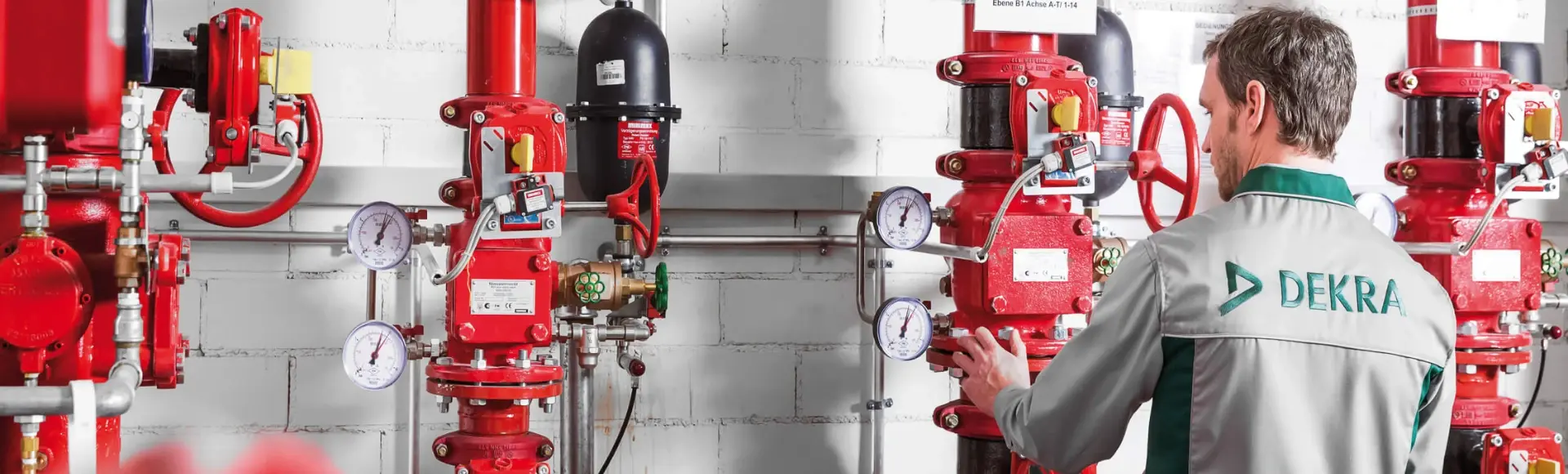
Closely monitor the strain of corrosion and creep on power plants and refineries with the SPICA measurement method.
Details
Minimize explosion risk in industrial processes

Process safety

Do you want to minimize the explosion risks that are associated with industrial processes? Let our DEKRA professionals guide you with customized solutions and long-standing expertise.
Details
Quality Management certification

Quality Management certification

Each industry has specific requirements for a quality management system. With our certification, you can be sure that your quality system meets the right standards.
Details
/>

Our approach

DEKRA combines specialist technical knowledge with an independent and risk-based approach. By assessing processes, equipment and installations, we give organizations greater insight into their risks and the condition of their assets. This provides a reliable basis for decisions concerning safety, compliance, maintenance, and operational continuity.

Flexible, tailored solutions

Our services can be applied during regular operations, maintenance shutdowns, and modifications. The precise scope is determined by the organization’s needs, the installation or product involved, and the applicable requirements.
Global expertise
Through DEKRA’s international network, organizations can access a broader range of testing, inspection, certification, consulting and training services. This global expertise supports companies with international sites, supply chains, and projects. The precise services are aligned with local requirements and the expertise available in each country.

Frequently Asked Questions

The oil and gas industry operates across a highly complex value chain, including exploration and production (upstream), transport and storage (midstream), and refining and distribution (downstream).
Each stage involves risks related to high-pressure systems, hazardous materials, potentially explosive atmospheres, and strict regulatory requirements. Independent inspections, testing and certification provide objective evidence that equipment, installations and safety systems meet applicable national and international requirements within the relevant scope.
Beyond regulatory compliance, independent verification strengthens operational transparency and helps organizations manage risk. Objective inspections support asset integrity management, reduce the likelihood of critical failures, and enhance credibility with regulators, investors and insurers. In politically sensitive or environmentally exposed regions, third-party verification can also help protect operational continuity and corporate reputation.
Process safety management is designed to prevent major incidents such as explosions, fires, toxic releases, and structural failures. In oil and gas facilities, where flammable materials and high-pressure systems are present, process safety requires structured technical and organizational measures, inspection regimes, emergency planning, and competent personnel.
Independent process safety assessments can identify weaknesses in mechanical integrity, safety systems, hazard analysis procedures, and emergency preparedness before incidents occur. By assessing whether safety-critical measures are properly designed, implemented and maintained, third-party evaluations help organizations reduce operational downtime, regulatory risks, and the potential for environmental damage. Robust process safety management is fundamental to safe, sustainable, and legally compliant operations.
Non-destructive testing (NDT) techniques enable organizations to detect corrosion, fatigue cracks, weld defects, and structural degradation without damaging the inspected component. Particularly in ageing infrastructure, offshore installations, refineries and pipeline networks, early detection of material weaknesses is critical to preventing unplanned shutdowns and serious failures.
Regular NDT inspections are an important part of asset integrity management. By combining suitable inspection intervals with preventive or predictive maintenance strategies, operators can extend asset lifetimes, optimize maintenance planning, and improve operational reliability. Independent NDT also supports reliable documentation and compliance with applicable inspection requirements, particularly in high-risk industrial environments.
Digital transformation in the oil and gas industry has increased reliance on industrial control systems (ICS), SCADA networks, remote monitoring platforms, and interconnected supply chain systems.
While digitalization can improve efficiency and performance monitoring, it also increases exposure to cyber threats, including ransomware, industrial espionage, and infrastructure sabotage.
Independent cybersecurity assessments, IEC 62443 assessments, penetration testing, and ISO 27001 certification can help organizations identify vulnerabilities and strengthen security across both operational technology and enterprise IT environments.
Cyber resilience is not merely an IT concern but also an operational safety issue: compromised control systems can directly affect physical processes. Structured cybersecurity governance helps protect critical infrastructure, support regulatory compliance, and strengthen long-term operational stability.